


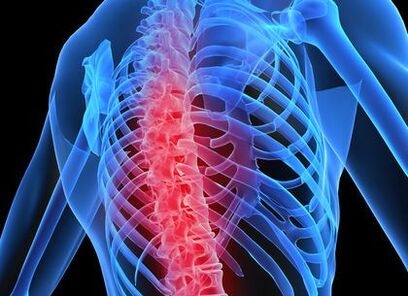
One of the most common pathologies of the musculoskeletal system of the body is thoracic osteochondrosis.As a result of the development of the disease, a person's spine becomes deformed.Such pathology leads not only to a decrease in the ability to fully move, but also to the malfunction of some organs and systems.The disease is accompanied by severe pain.
Symptoms and signs of the disease
One of the most common reasons a person goes to the doctor is pain.In the case of osteochondrosis of the thoracic region, the pain syndrome can present a number of characteristics:
- After the pain, numbness is felt in the chest, which gradually spreads to the left arm.
- Pain syndrome occurs in the normal position of the body, accompanied by a burning sensation in the chest.
- Pain not only in the sternum, but also in the heart, liver, stomach and even kidneys.This phenomenon is explained by the fact that the disease “masks” itself as other diseases.
- The occurrence of pain with sudden bending and increased breathing.
- The sensation of pain increases at night.
But osteochondrosis of the thoracic spine is characterized not only by pain, but also by a number of other signs:
- Decreased mobility in the thoracic spine.
- Paresthesia (chills).
- Decreased sensitivity (perception of touch, temperature).
- Impaired motor activity.
Stages of osteochondrosis
Osteochondrosis of the thoracic region develops in stages.Its duration depends on the individuality of the organism and the reasons that caused the disease.In total, there are four stages of development of the disease, each of which has a number of clinical features.
First stage
First, the intervertebral disc begins to “lose water”, as a result of which its firmness and elasticity decrease, although the damaged vertebra is still able to withstand all physical stress.As a result, the intervertebral disc gradually flattens and decreases in height.In the first stage, the formation of protrusions begins.
The patient complains of focal pain syndrome: pain is felt only in the region of the injured spine.The nature of the pain is constant, possibly in the form of low back pain.Sometimes a person feels a strange pain in the heart, uncontrolled muscle contractions, like cramps.
Second stage
The fibrous ring becomes covered with fissures, the spinal segment becomes unstable.The patient notices pain, which intensifies during movement, as well as discomfort that occurs during prolonged postures.In the second phase, subluxations may appear.
At this stage, thoracic osteochondrosis, manifested by subluxations, is characterized by additional symptoms: discomfort, weakness, intercostal pain, pain not only in the thoracic organs, but also in the limbs.Subluxations with osteochondrosis are dangerous because they can manifest themselves after an indefinite period.
Third stage
At this stage, osteochondrosis of the cervicothoracic spine is very difficult for a sick person not to notice.In the spinal segment, the fibrous ring ruptures, causing a hernia in the intervertebral disc.Therefore, a person not only feels severe pain, but also notices signs of disruption in the functioning of other organs and systems.
The person has muscle-tonic and neurovascular disorders.The mobility of the spine is limited due to the formation of kyphosis or scoliosis.As a result of these processes, the degree of fixation of the spine decreases.
Fourth stage
As the disease progresses, the intervertebral cartilage begins to lose its function.The vertebrae surrounding the damaged spinal segment do not encounter the usual resistance due to the cartilage, so they begin to gradually move closer together.As a result of this process, the intervertebral joints become deformed and spondyloarthrosis or spondylolisthesis develops.
To preserve the spine, the body activates processes to compensate for lost functions: the damaged vertebra begins to gradually grow in width, thus increasing its area.The destroyed fibrous ring tissue is replaced by bone.At this stage, the patient notices a decrease in pain, but it is replaced by limited mobility (the spine ossifies in the injured area).
Treatment methods for thoracic osteochondrosis
Osteochondrosis of the cervicothoracic region is not a fatal disease, which can be cured with adequate treatment.The earlier the disease is diagnosed, the easier it will be to eliminate it.
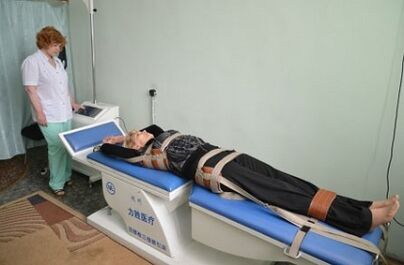
Currently, the treatment of thoracic osteochondrosis is carried out using the following methods:
- Conservative treatment.
- Traction.
- Surgical treatment.
Drug treatment is based on the following principles.The main one is the fight against pain and inflammation.To eliminate pain, doctors use anti-inflammatories.
Improving the condition of cartilaginous tissue.For this purpose, doctors prescribe patients a prescription for chondroprotectors.
Relief of muscle spasm.Often, spinal movement is limited by tight muscles.To eliminate this pathology, doctors prescribe muscle relaxants.
To reduce pain, doctors recommend their patients to use various ointments with a warming effect.
The dosage of medications is controlled by the attending physician.The patient must remember that medications must be taken in the order indicated by the doctor.You should not mix medications or replace them with analogues without your doctor's knowledge.
In addition to drug treatment, doctors practice acupuncture, reflexology, physiotherapy and massage.Each treatment method should be discussed with a doctor and carried out by a specialist.
In the initial stages of the disease, all treatment of osteochondrosis is limited to gymnastics and special exercises.Drug therapy consists of prescribing drugs that improve metabolism and vitamin therapy.
Patients are not recommended to do gymnastics without the supervision of the attending physician.It should be borne in mind that during the acute period of the disease it is not possible to exercise.Any exercise therapy is selected depending on the location of the damaged segment in the spine.
Consequences of osteochondrosis
If the disease is not treated, it progresses.If the treatment is successful, the risk of complications is minimized.The main complications are:
- Sciatica.
- VSD.
- Intervertebral hernia.
- Radiculitis.
- Migraine.
- Lumbago.
- Spondyloarthrosis.
- Spondylolysis.
- Disability.
- Decreased hearing or vision.
- Epicondylitis.
Disease prevention
To prevent the development of osteochondrosis of the thoracic spine, you must always take care of your health.
To begin with, you must exclude all factors that can provoke the development of osteochondrosis: do not forget about the dangers of intense physical activity, follow the rules for maintaining correct posture.
All people must undergo regular medical examinations.If during a medical examination the doctor reveals a primary pathology of the spine, the patient must immediately make an appointment with an orthopedist.
To prevent the disease, it is necessary to promptly treat all diseases that arise in the musculoskeletal system.After suffering injuries, it is mandatory to undergo a rehabilitation course.
You need to take care of your body: change your body position more often during work, avoid hypothermia and overheating and be constantly under medical supervision.
At home, a person can always support the body with the help of gymnastics.Its task is to strengthen the back muscles and improve the health of the body.
The best prevention of any disease is a balanced diet.Your diet should include not only vegetables, but also a complex of vitamins, which should be taken in spring and winter.To strengthen the musculoskeletal system, you can use massage, medication and swimming.